

Puzzle games and RPGs get mashed together a lot these days, but most of them settle for a shallow match-3 layer slapped on top of generic combat. Project QT tries something different: it builds its entire battle system around puzzle mechanics, then backs it up with real team strategy and character progression. We spent time with it to see whether that combination actually holds up, or whether it’s just another free-to-play title coasting on its art style.
What Is Project QT? A Quick Overview
Project QT is a free-to-play puzzle-RPG developed by xDNA and published by Nutaku, available on PC and Android at ProjectQTGame.com. The pitch is simple on paper: recruit a team of characters, battle through story missions using a puzzle-based combat system, and grow your roster as you progress. It’s been around for a few years now, and it’s still receiving regular content updates, which says something about its staying power.
The Story: A Space Virus and a Ragtag Team of Heroines
The narrative setup leans into classic sci-fi territory. A mysterious virus threatens the galaxy, and it’s up to you to assemble a team capable of stopping it. It’s not going to win any awards for originality, but it works well enough as a framework to introduce new characters, locations, and story beats over time. The tone stays light and doesn’t take itself too seriously, which fits the overall pacing of the game.
Core Gameplay: How the Puzzle Mechanics Work
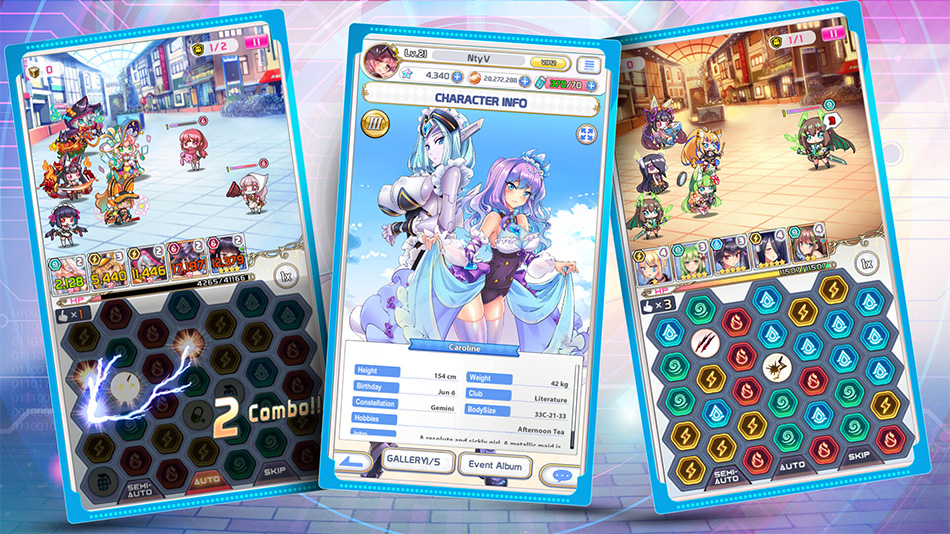
This is where Project QT sets itself apart. Instead of treating puzzles as a side activity, the game ties them directly into combat. Matching tiles on the board translates into attacks, buffs, or resource generation, depending on which pieces you line up and how your team is built around them. It takes a little getting used to if you’re coming from a standard turn-based RPG, but once it clicks, it adds a layer of decision-making that a lot of similar games skip entirely.
Turn-Based Combat and Team Strategy
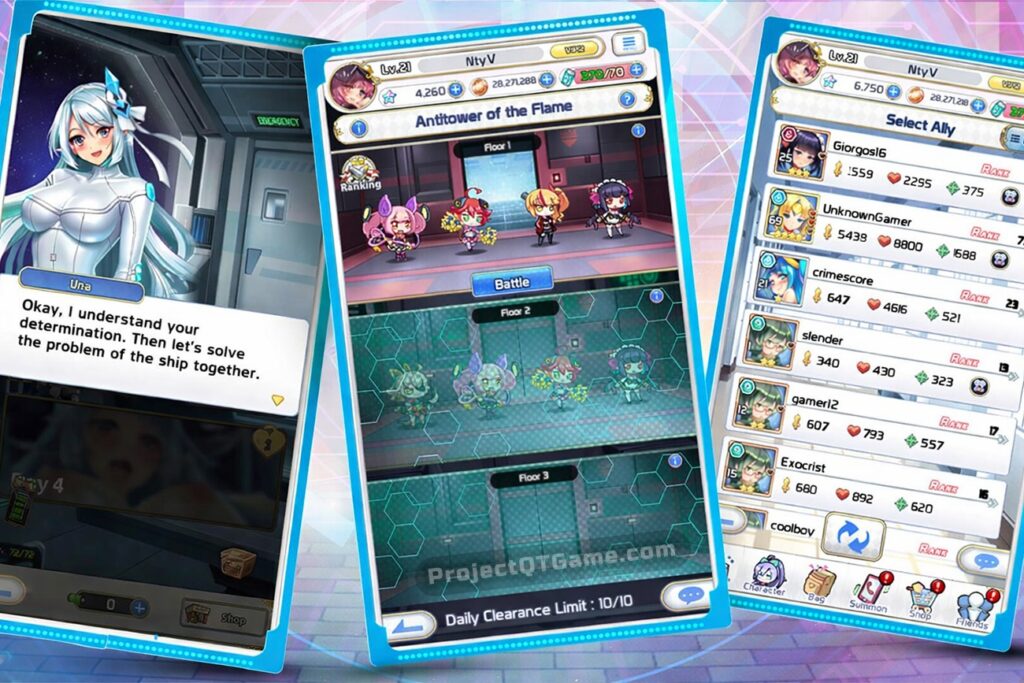
Combat unfolds in turns, and your puzzle moves determine how effective each character’s abilities are during a given round. Team composition matters: certain characters synergize better together, and figuring out which combinations work against specific enemies becomes a meaningful part of the experience. It’s not a deep tactics game by any stretch, but there’s enough here to reward players who actually think about their lineup instead of just picking favorites.
Building Your Roster: Characters and Progression
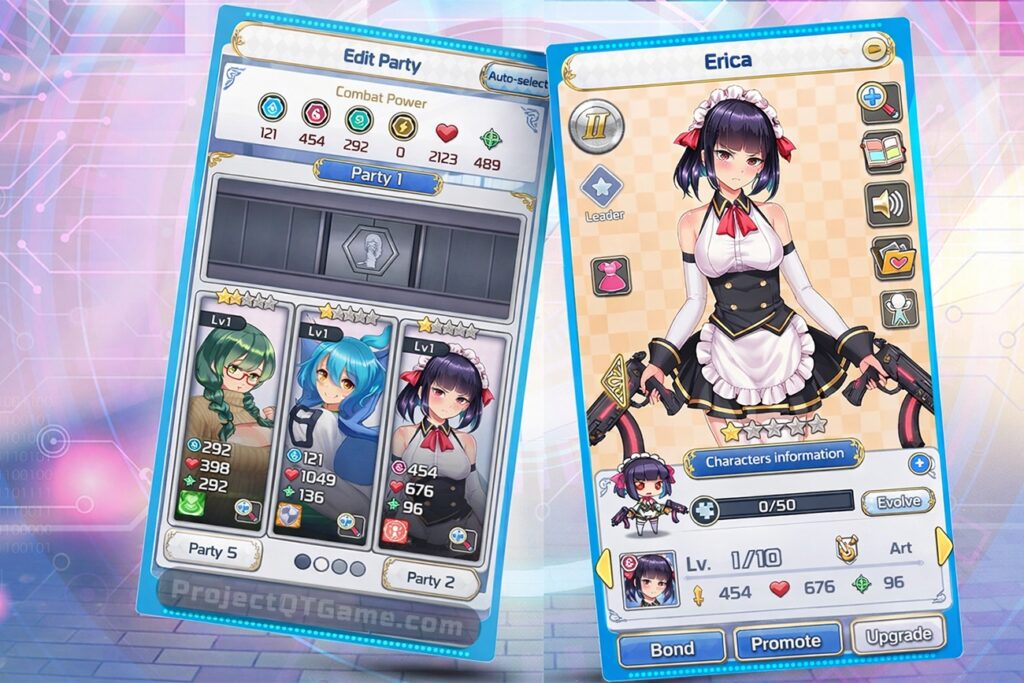
As you clear missions, you’ll unlock new characters and materials to level them up. The progression loop is fairly standard for the genre: grind stages, collect resources, upgrade your team, repeat. What keeps it from feeling too repetitive is the steady drip of new characters and events, which gives you a reason to come back and reassess your roster every so often rather than settling into one fixed team forever.
Visuals and Presentation
Project QT’s art direction is one of its strongest points. The character designs are polished and consistent, and the UI is clean enough that navigating menus and battle screens never feels like a chore. It won’t blow you away technically, since it’s clearly built with mobile performance in mind, but it looks good for what it is and runs smoothly even on modest hardware.
Platforms and Pricing: Where to Play
Project QT is free to play, with optional in-game purchases for those who want to speed up progression. You can jump in directly through your browser at ProjectQTGame.com, no download required, which makes it easy to try without any commitment. If you’d rather play on the go, an Android version is also available for download from the same site. There’s no upfront cost either way, so testing the waters costs you nothing but time.
Final Verdict: Should You Play Project QT?
Project QT does something a lot of puzzle-RPGs don’t bother trying: it actually integrates its puzzle mechanics into the core combat loop instead of treating them as an afterthought. The character progression is satisfying, the art is solid, and the free browser access makes it painless to check out.
On the downside, the story is forgettable, and the gameplay loop can start to feel grindy once you’ve cleared the early chapters. Players looking for a fast-paced action RPG will probably find the pacing too slow, and the free-to-play monetization, while not aggressive, is still there in the background.
If you’re after a puzzle-RPG with more strategic depth than the average match-3 clone, Project QT is worth a try, especially since you can jump in for free without installing anything. Just don’t expect a story that will stick with you long after you close the tab.
 Data Protection Tips
 What tools are used for big data?
 How to change the appearance of icons on iphone?
 What type of tik tok video is the most watched?
 Revolutionizing communication: GPT chatbots ushering in a new era of human-machine interaction
 Innovative Ideas for Decorating with Plants in Your Living Room
 Top Activities for an Unforgettable Travel Experience
 Top tips for stress-free travel planning
 Enhancing your daily life with practical technology tips
 Tips for Keeping Your House Cool in Summer Without Air Conditioning
 Everlusting Life is Now Available on Android APK
 Aeons Echo Review: Greek Mythology Meets Cyberpunk RPG
 The Ultimate Guide to Advanced Search on Twitter: How to Spot Fake News and Bot Activity Like a Pro
 Installation and Troubleshooting of TV Antennas and Satellite Dishes in Toulon: Professional Solutions for Tackling Interference Problems with TV Signals in the Var